

Overpricing Your Coos County Home Is Costly
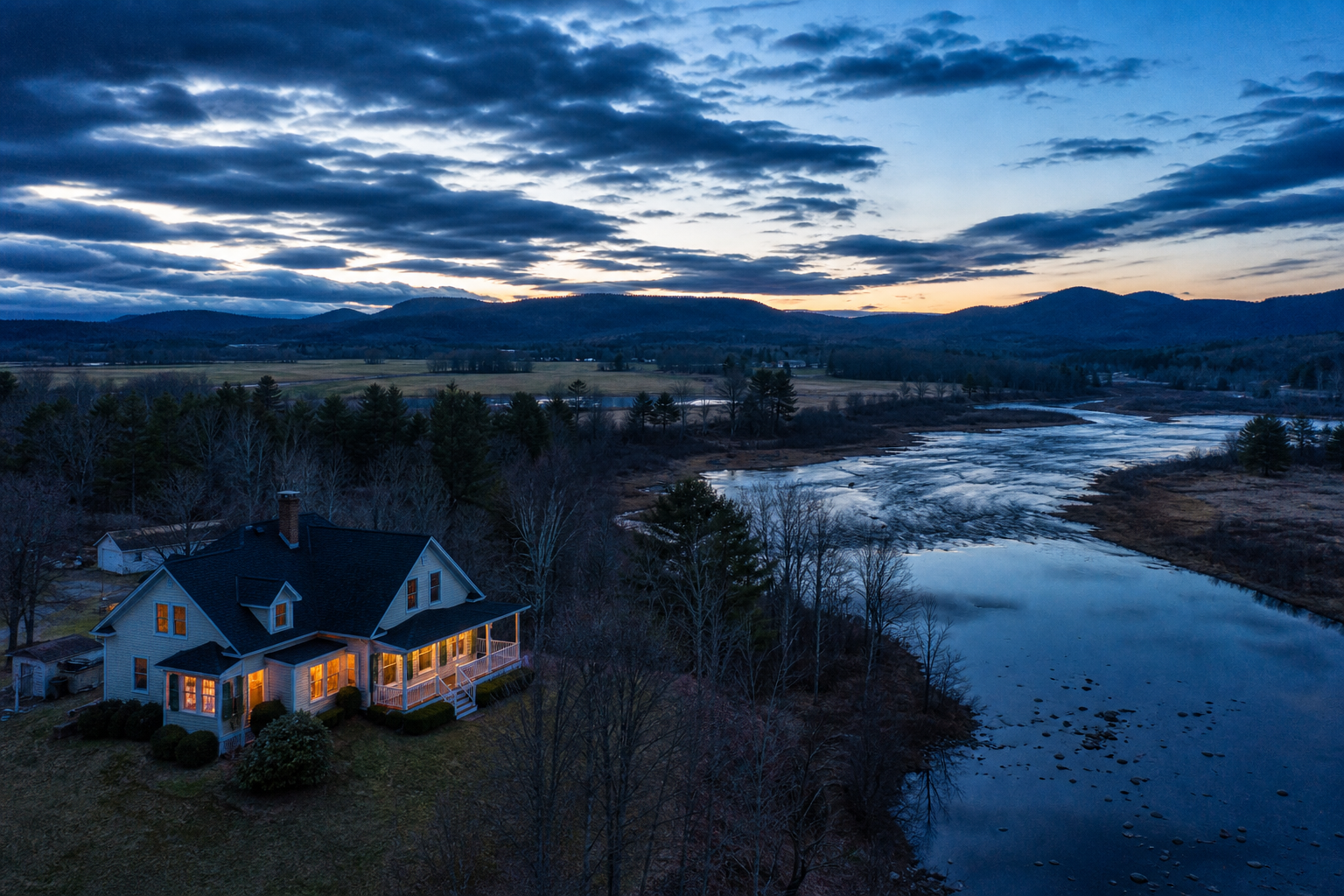
Overpricing a Coos County home in 2026 means longer days on market, price cuts, and a final sale price below what you’d have netted with a realistic list price. With median sale prices around $225,000 and homes selling below asking, the data strongly favors accurate pricing from day one.
What happens when you overprice a home in Coos County?
Overpricing a Coos County home in 2026 means sitting on the market longer, watching buyers choose competing listings, and eventually cutting your price, often to less than you would have netted with an accurate number from the start. The county’s current data shows homes selling below asking price, marketing times in the 40–60 day range, and over 500 active listings giving buyers real choices. In this environment, an inflated list price doesn’t attract higher offers, it just drives buyers away.
Key Takeaways
- The most recent available data, from Q1 2026, shows Coos County’s median home price at approximately $240,000, the most affordable county in New Hampshire, according to New Hampshire Public Radio.
- Coos County home prices have cooled in 2026 after a 117% run-up from 2019 to 2025, the largest gain of any county in the state, per the NH Fiscal Policy Institute.
- With over 500 active listings and a balanced market, homes in Coos County are generally selling below asking price, not above it.
- Typical marketing times run 40–60 days countywide, and some towns like Lancaster are seeing median days on market closer to three months, particularly when list prices exceed what the local market supports.
- Pricing accurately from day one, anchored to recent closed sales, not peak values or neighboring list prices, is the single biggest factor in whether a Coos County home sells quickly or stalls.
Why is overpricing such a real risk in Coos County right now?
The short answer: the market has shifted, but a lot of seller expectations haven’t caught up yet.
From 2019 through 2025, Coos County saw median sale prices climb by roughly 117%, the largest percentage gain of any county in New Hampshire, according to a March 2026 issue brief from the New Hampshire Fiscal Policy Institute. That’s a remarkable run. And it’s exactly why so many sellers today are anchoring to peak values instead of what the 2026 market is actually doing.
Here’s the problem with that. Buyers don’t care what your home was worth in 2022. They’re looking at what comparable homes closed for last month. And right now, those closed sales are telling a different story than many list prices suggest.
According to New Hampshire Public Radio’s data reporting on the first quarter of 2026, Coos County’s median home price was around $240,000, the most affordable in the state, but also a figure that had been softening. By late summer 2026, county-level data pointed to median sale prices closer to $225,000, down noticeably year-over-year. That’s not a collapse, but it’s a real cooling, and it matters enormously when you’re deciding where to set your list price.
The inventory picture has changed
For most of the post-pandemic years, low inventory kept sellers in the driver’s seat. Multiple offers, waived contingencies, sales above asking, that was the norm. It’s not the norm in Coos County in 2026.
Realtor.com’s Coos County market snapshot from summer 2026 shows more than 500 active listings, with active listing counts up double-digits compared to the prior month. The county is described as a “balanced” market, meaning supply and demand are roughly in equilibrium, not tilted heavily toward sellers. When buyers have that many options, an overpriced home doesn’t generate urgency. It just gets skipped.
The pattern I’m seeing in 2026 is that homes price correctly from the start, sell in a reasonable timeframe, and close near list. Homes that open too high sit. They get a price cut. Then they sell, but often for less than they would have if they’d been priced right on day one. That’s the real cost of overpricing, and it’s one of the things I’m most direct with sellers about before we ever go live.
Town-level variation matters
Coos County isn’t monolithic. Some towns are more forgiving than others, and some property types have more buyer depth than others. But the data suggests that even within the county, pricing aggressively relative to local comps creates problems.
Take Lancaster as an example. Realtor.com’s Lancaster snapshot shows median listing prices above $320,000, well above the county median, with days on market stretching toward three months. That gap between what sellers are asking and what buyers are paying is a signal. It doesn’t mean Lancaster is a bad market; it means homes priced above what local buyers can or will pay are sitting, while correctly priced homes move.
For a deeper look at how I approach pricing mechanics specifically in Northern New Hampshire, see my post on How to Price Your Northern NH Home Right.
What does overpricing actually cost you, and how do you avoid it?
The biggest pricing mistake I see sellers make is focusing on what another property is listed for instead of what comparable homes actually sold for. List prices are opinions. Closed sale prices are facts. The market determines value, and in Coos County right now, the market is speaking pretty clearly.
Here’s what overpricing typically sets in motion:
- Fewer showings early. Buyers doing online searches filter by price. If you’re above the range your home realistically belongs in, you’re invisible to the buyers most likely to buy it.
- Longer days on market. Typical marketing times in Coos County are running 40–60 days for well-priced homes. Overpriced homes extend that meaningfully, and a listing that’s been sitting for 90+ days starts to carry stigma. Buyers wonder what’s wrong with it.
- Price reductions that signal weakness. A price cut after 60 days on market is public. Buyers see it, and it often invites lower offers than you would have received if you’d started at the right number.
- Appraisal problems at the finish line. If you do get an offer at an inflated price, the appraisal may not support it. That creates renegotiation, delays, or a deal that falls apart entirely. I’ve written about how this plays out in Common Appraisal Issues in Northern NH, it’s worth reading before you set your number.
How to set a realistic price in this market
The foundation is recent closed sales, specifically, homes that are genuinely comparable to yours in size, condition, location, and features, that closed within the last three to six months. Not list prices. Not what your neighbor thinks their house is worth. Closed sales.
The New Hampshire Association of REALTORS® publishes county-level data on median prices, units sold, and days on market, and frames accurate pricing relative to those medians as a primary driver of how quickly a home sells and whether it closes near list. That county-level context is a useful sanity check, but it’s a starting point, not a substitute for a property-specific analysis.
A few things I walk every seller through before we decide on a number:
- Condition relative to comps. If your home needs work that comparable sold homes didn’t, that difference needs to be reflected in your price, not explained away in the listing description.
- Location within the county. Coos County covers a lot of ground. A camp on a pond in Pittsburg and a colonial in Gorham are not the same market, even if the county median applies to both.
- Current competition. What else is listed right now at a similar price point? If buyers have three comparable options and yours is the highest-priced, you need a compelling reason for that premium, or you need to adjust.
- Your timeline. If you need to sell within a specific window, pricing accurately from the start is even more important. A stale listing with a price cut rarely recovers the momentum of a fresh, well-priced one.
Online automated estimates can be a starting point for curiosity, but they’re notoriously unreliable in rural markets like Coos County, where sales volume is lower and property variation is higher. Your specific number depends on your home’s condition, location, and the most recent local comps, that’s exactly the kind of analysis I do before we talk about a list price.
| Market Indicator | Coos County (2026) |
|---|---|
| Median sale price (Q1 2026) | ~$240,000 (NHPR) |
| Median sale price (late summer 2026) | ~$225,000 (down year-over-year) |
| Price trend since 2019 | +117% (largest gain in NH, per NHFPI) |
| Active listings (summer 2026) | 500+ (Realtor.com) |
| Market balance | Balanced (not seller-favored) |
| Typical days on market (correctly priced) | 40–60 days |
| Sale-to-list ratio | Below 100% (homes selling under asking) |
Frequently Asked Questions
How do I figure out a realistic asking price for my Coos County home?
Start with recent closed sales of genuinely comparable homes, similar size, condition, and location, that sold within the last three to six months. List prices from active or expired listings are not a reliable benchmark; only closed sales reflect what buyers actually paid. A local agent with access to county-level MLS data can run a comparative market analysis that accounts for your specific property and current competition, which is far more accurate than any online estimate in a rural market like Coos County.
Are Coos County home prices still going up in 2026?
No, prices have cooled. After a 117% run-up from 2019 to 2025 (the largest gain of any New Hampshire county, per the NH Fiscal Policy Institute), Coos County median sale prices have softened in 2026. The most recent data available shows median sale prices around $225,000 by late summer 2026, down from approximately $240,000 in Q1 2026 per New Hampshire Public Radio. That’s still historically high relative to pre-pandemic levels, but sellers anchoring to peak values are likely to overprice in this environment.
What happens if I price my house too high in Coos County?
An overpriced home typically sits longer, accumulates days on market, and eventually requires a price cut, often landing at a lower final sale price than a well-priced listing would have achieved from the start. In a balanced market with over 500 active listings, buyers have alternatives and will simply move on rather than negotiate down a price they see as unrealistic. Extended time on market also creates stigma: buyers start wondering why a home hasn’t sold, which invites lower offers when one finally comes in.
How long are homes taking to sell in Coos County if priced correctly?
Correctly priced homes in Coos County are generally selling in the 40–60 day range in 2026. Some towns are running longer, Lancaster, for example, has seen median days on market closer to three months, particularly for homes listed above the county median. The key variable is how closely the list price aligns with what recent comparable sales support; homes that open at a realistic number move faster than those that require price reductions to attract attention.
Is Coos County still a seller’s market?
Not in the way it was during the low-inventory years of 2021 and 2022. Realtor.com’s summer 2026 snapshot describes Coos County as a balanced market, with supply and demand roughly in equilibrium and more than 500 active listings. Homes are generally selling slightly below asking price rather than in bidding wars above it. That doesn’t mean it’s a bad time to sell, correctly priced homes are still moving, but sellers who price as if it’s still a strong seller’s market are likely to be disappointed.
Do I need a local Coos County agent to set my price, or can I use online estimates?
Online automated estimates are a rough starting point at best, and frequently unreliable in rural markets like Coos County where sales volume is lower and property variation is higher. A local agent with access to actual MLS closed-sale data, and familiarity with the specific submarket your home is in, will give you a far more accurate picture. The difference between a well-supported list price and an inflated one can easily translate to additional months on market and a lower final sale price.
Getting the price right from the start is the most consequential decision in a Coos County home sale right now. In a balanced market with softening prices and real buyer choices, there’s no room for wishful thinking on the number. If you’re thinking about selling and want an honest, data-grounded look at what your home is worth in today’s market, I’m happy to walk through it with you.
Schedule a consultation with Nick DeMers to get a straightforward market analysis for your property.
Equal Housing Opportunity. Nick DeMers is licensed with eXp Realty and regulated by the New Hampshire Real Estate Commission. This article is general information only and does not constitute legal, tax, or financial advice. Confirm your specific numbers with your closing agent, tax advisor, or lender.

About Northwoods Property Team
Northwoods Property Team at eXp Realty provides local buyer and seller representation, property-specific pricing guidance, practical transaction advice, and technology-powered real estate marketing throughout Northern New Hampshire.