

Selling a Rural Home in Northern NH
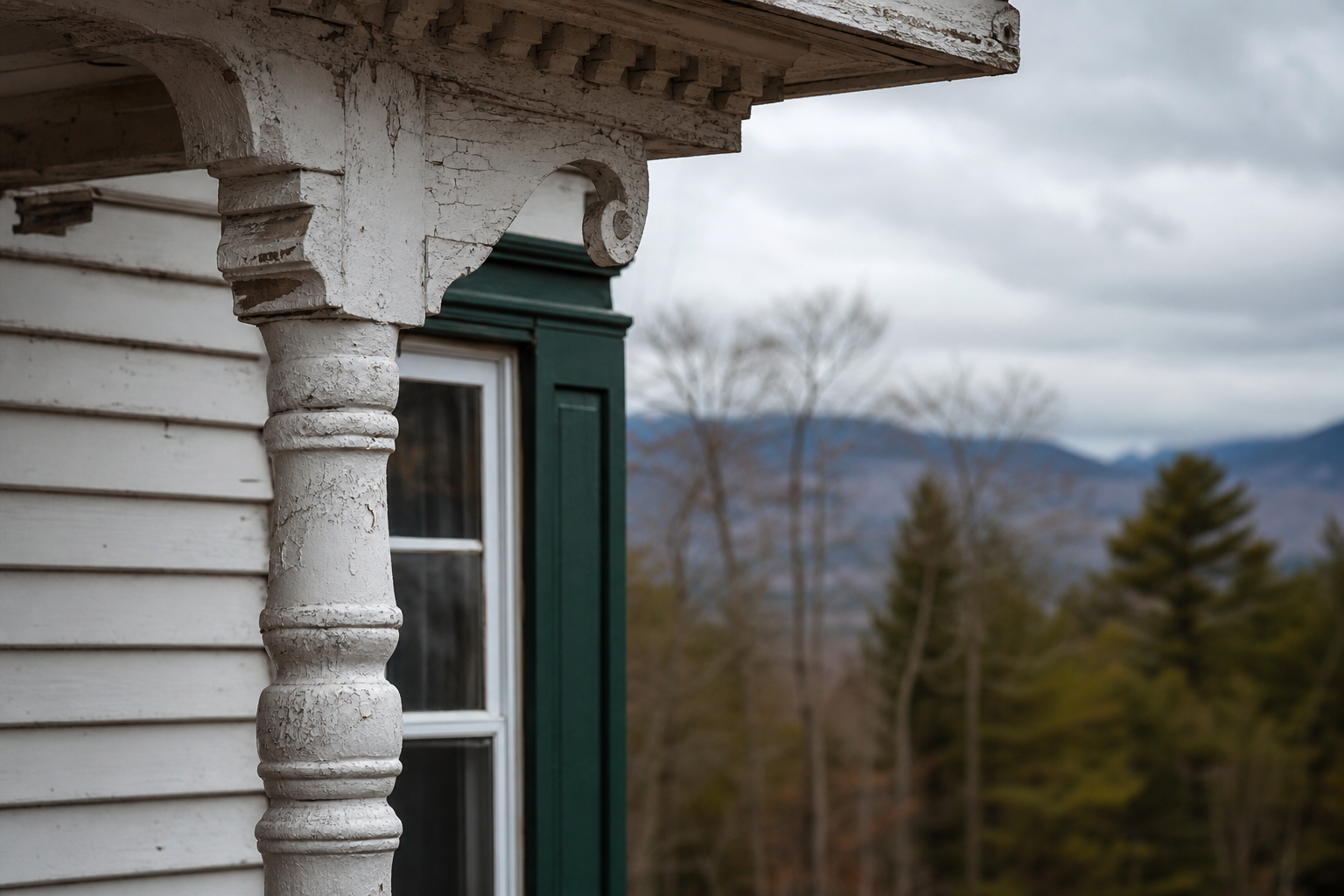
Selling a rural home in Northern New Hampshire requires a different approach than a typical subdivision listing. Effective marketing highlights land features, access, water and septic systems, and the lifestyle the property offers, while meeting New Hampshire’s specific disclosure requirements under RSA 477.
What makes selling a rural home in Northern New Hampshire different from a standard listing?
Rural homes in Coös County and the North Country don’t sell the same way a three-bedroom colonial in southern New Hampshire does. The land, the systems, the access, and the lifestyle all become part of the transaction in ways that a city or suburban listing never has to address. Buyers need more information, the pool of qualified buyers is smaller, and the marketing has to do more work to close that gap.
Why Rural Properties Need a Different Marketing Approach
When I take on a rural listing in Stark, Stratford, or Jefferson, the first thing I think about isn’t the interior photos. It’s the land, the access, and the systems. Those three things are what rural buyers are actually evaluating, and they’re also where most sellers leave money on the table by under-explaining or under-documenting what they have.
A rural home in the North Country isn’t just a structure. It’s a well, a septic system, a driveway, a road, acreage that may or may not have trails, and a lifestyle that buyers are often purchasing for the first time. If your marketing doesn’t explain all of that clearly, buyers fill in the blanks with uncertainty, and uncertainty kills offers.
Land and Lifestyle: Show Buyers What They’re Getting
The land itself is often the primary draw for buyers looking in Coös County. Trails, fields, timber, views, proximity to snowmobile corridors, these things matter deeply to the people who are searching for a North Country property. But they only matter if buyers can actually see and understand them.
Standard listing photos don’t accomplish this. What works for rural properties is a combination of aerial photography, mapped overlays, and video that walks buyers through the land the way you’d walk a friend through it. I mark property lines and trail routes on aerial images, note proximity to New Hampshire State Parks or conserved lands, and use video to convey the setting, the scale, and the feel of the property in a way that still photos simply can’t.
If the property has current use tax status, any conservation easements, or recorded trail rights, those details belong in the listing, clearly explained, not buried in a footnote. Buyers who are new to rural ownership often don’t know what current use means or how it affects their taxes. Explaining it up front builds confidence rather than confusion.
Access and Winter Conditions: Address This Head-On
Road access is one of the first things a serious North Country buyer asks about, and for good reason. Whether a road is town-maintained or private, the grade of a long driveway, and the distance to a plowed main route all factor into whether a buyer can actually live there year-round. Emergency response times in rural Coös County are longer than in more populated areas, and buyers know it.
Marketing materials for rural listings should spell out the access situation directly. Is the road a town road or a private road? Is there a road maintenance agreement? Has the driveway been navigated in winter without issue? If the answer to those questions is favorable, say so, clearly and specifically. If there’s a class VI road or a seasonal condition involved, disclose it early rather than letting a buyer discover it during due diligence and lose confidence in the whole transaction.
Photos of the access point, the driveway, and the road condition in different seasons can do a lot of work here. Buyers sitting in Boston or Connecticut who are considering a move to the North Country are making a significant leap of faith. Good documentation reduces that anxiety.
Systems Transparency: Wells, Septic, and Insulation
New Hampshire law is specific about what sellers of residential property must disclose, and for rural homes, those requirements land squarely on the systems that matter most to buyers. Under RSA 477:4-d, sellers of 1-4 family dwellings are required to provide written disclosure covering the private water supply system (type, location, installation date, most recent water test date, and any known malfunctions), the private sewage disposal system (location, service history, contractor information), insulation type and location, and flood hazard zone status.
That’s the legal floor. But in my experience, going beyond the minimum is one of the most effective things a rural seller can do to build buyer confidence and reduce friction later in the transaction.
Here’s what I recommend sellers have ready before we list:
A recent water test with satisfactory results, ideally within the past 12 months, and tested for the contaminants that matter in northern New Hampshire, including arsenic and radon. New Hampshire DES has guidance on private well testing that’s worth reviewing.
Septic service records, the most recent pump date, the contractor’s name, and the system type (conventional leach field, mound system, etc.). If you’ve had it inspected recently, that documentation is gold.
Well age and type, drilled vs. dug, depth if known, year installed if available.
Insulation details, especially any upgrades like spray foam in the basement or blown-in attic insulation, which speak directly to heating costs in a climate where winters are long and fuel bills are real.
Buyers financing a rural purchase will often require a water test as a lender condition anyway. Having one in hand from the start keeps the timeline clean and prevents last-minute scrambles. According to HomedataReports’ 2026 overview of RSA 477 seller requirements, the 2024 amendments to RSA 477:4-a through 4-h now explicitly require flood-zone disclosure, and also make environmental testing for radon, arsenic, and PFAS increasingly relevant for rural properties near rivers or wetlands. If your property sits in a river valley or near wetlands, knowing your flood status before you list is worth the effort. A favorable FEMA flood map reference in your marketing materials is a genuine selling point.
For homes built before 1978, the federal Lead-Based Paint Disclosure requirement applies as well. This is a separate federal obligation from the state disclosure form, and it requires both a disclosure and an opportunity for buyers to conduct a lead-based paint inspection. It’s not optional, and I walk every seller of an older home through what it requires before we list.
The Disclosure Form and What It Signals to Buyers
The New Hampshire Association of Realtors provides a standard Seller’s Property Disclosure form that covers the required items under RSA 477. Completing it thoroughly, rather than leaving items blank or marked “unknown”, signals to buyers that the seller is organized, transparent, and confident in what they’re selling. In a rural transaction where buyers are already navigating more unknowns than a suburban purchase, that signal matters.
Closing Considerations for Rural NH Transactions
The Transfer Tax
New Hampshire’s Real Estate Transfer Tax is set by statute under RSA Chapter 78-B at $0.75 per $100 of consideration for each party, buyer and seller, for a combined $1.50 per $100 of the sale price. As NH Business Review has noted, New Hampshire is effectively first in the nation for transfer tax burden because both sides pay. The rate itself is fixed by law and applies statewide, including rural Coös County transactions.
What isn’t fixed is how the tax gets handled in a negotiation. In some rural transactions where buyers face higher perceived risk, an older well, a long private driveway, a more remote location, sellers sometimes choose to offer concessions on closing costs rather than straight price reductions. How that plays out in your specific transaction depends on your situation, your buyer, and the offer terms. It’s something I work through with each seller individually, not a formula.
Title and Closing in Rural NH
New Hampshire is an attorney-closing state in practice for most financed transactions. The buyer or buyer’s lender typically selects the title company or closing attorney, so as a seller, you’ll generally cooperate with whoever the buyer brings to the table. In the North Country, where options are fewer and local land issues, easements, old deeds, private road agreements, require practitioners who know the area, working with experienced local providers matters. Locally, I’ve seen good results with title companies and law offices that have genuine familiarity with Coös County property records and rural land issues.
One important note on the closing process: wire fraud is a real and growing risk in real estate transactions. Before transferring any funds at closing, always verify wiring instructions by calling a known, trusted contact at your title company or attorney’s office directly. Never rely solely on emailed instructions, even if they look legitimate. A quick phone call can prevent an irreversible loss.
Timing Your Rural Listing
As of August 2026, we’re in a window that works well for rural properties with substantial land. Late summer through early fall gives buyers the ability to physically explore the property, walk trails, assess the land, and understand the setting, before conditions change. That said, the right timing for your listing depends on your specific property and your goals. A well-prepared listing with strong aerial photography and video can perform in any season; winter listings simply require more emphasis on heating systems, insulation, and plowed access than on land features.
Marketing Element Why It Matters for Rural NH Listings Aerial photography with property line overlays Helps buyers visualize acreage, trails, and land features they can’t assess from interior photos Video walkthrough of land and access Conveys scale, setting, and driveway/road conditions that still photos miss Recent water test results (satisfactory) Removes a major buyer objection early; often required by lenders anyway Septic service records Demonstrates system is maintained; reduces due-diligence uncertainty Road and access documentation Addresses winter-condition concerns specific to North Country buyers Flood zone status (FEMA reference) Required disclosure under RSA 477; favorable status is a genuine selling point Current use / conservation easement details Buyers new to rural ownership need this explained clearly to understand value Insulation type and upgrades Directly addresses heating cost concerns in a cold-climate market
Frequently Asked Questions
How does selling a home in the North Country differ from selling near Manchester or in southern NH?
The buyer pool is smaller and more specific in the North Country, and the properties themselves require more explanation. Wells, septic systems, private roads, large acreage, and seasonal access are all factors that rarely come up in a southern NH suburban transaction but are central to almost every rural Coös County sale. Marketing has to work harder to reach the right buyers and give them enough information to feel confident making an offer on a property they may have only seen online before visiting.
What do I have to disclose about my well and septic when I sell a rural home in New Hampshire?
Under RSA 477:4-d, you’re required to disclose the type, location, and known malfunctions of your private water supply system, the date of the most recent water test, any unsatisfactory results, and similar information about your septic system including service history and contractor. These disclosures must be provided in writing before or during preparation of the purchase and sale contract. Going beyond the minimum, with recent test results and service records in hand, typically helps a transaction move more smoothly.
Who pays the New Hampshire Real Estate Transfer Tax, and can it be negotiated?
By statute under RSA Chapter 78-B, both the buyer and the seller each pay $0.75 per $100 of the sale price. The rate is fixed by law and isn’t negotiable in that sense. However, how each party’s share is handled within a transaction, whether a seller offers closing cost concessions that effectively offset a buyer’s portion, is a matter of contract negotiation and varies by situation. Talk through the specifics with your agent before you’re in the middle of an offer.
How do I market my land, trails, and privacy to attract the right buyers for a rural Coös County home?
Aerial photography with property line and trail overlays, video that walks buyers through the land, and clear written descriptions of what the property offers, current use status, snowmobile corridor access, conserved land adjacency, timber, views, are the tools that work. Rural buyers are often buying a lifestyle as much as a structure, and your marketing needs to show them that lifestyle, not just the house. Vague remarks like “lots of land” don’t move buyers; specific, documented detail does.
Are there flood-zone or environmental disclosures required for homes near rivers or wetlands in the North Country?
Yes. Since July 2024, flood-zone status is an explicit required disclosure under RSA 477:4-a through 4-h. If your property sits in a federally designated flood hazard zone, that must be disclosed. Environmental considerations like radon, arsenic, and PFAS are increasingly relevant for properties on private wells near rivers or wetlands. A favorable FEMA flood map status is worth referencing in your marketing; if your property is in a flood zone, disclosing any mitigation steps you’ve taken is the right approach.
Do North Country buyers care more about road access and winter maintenance?
Consistently, yes. Whether a road is town-maintained or private, who handles plowing on a long driveway, and whether a property is accessible year-round are questions I hear from nearly every serious buyer looking at rural North Country properties. Harsh winters and longer emergency response times in sparsely populated areas make access a practical concern, not just a preference. Addressing it directly in your marketing, with photos, documentation of road maintenance arrangements, and clear language about year-round access, reduces buyer hesitation before it becomes a problem.
Selling a rural property in Northern New Hampshire takes more preparation and more intentional marketing than a standard listing, but done right, it connects your property with buyers who are genuinely looking for exactly what you have. If you’re thinking about selling a rural home, camp, or acreage property in the North Country, I’m glad to walk you through what a well-prepared listing looks like for your specific property.
Reach out to schedule a conversation, no pressure, just a straightforward look at what your property is worth and what it would take to market it well.
About Nick DeMers
Nick DeMers helps homeowners throughout Northern New Hampshire prepare, position, and sell their properties with confidence. Based in Groveton and serving communities across the greater Northwoods region, including Berlin, Gorham, Lancaster, Littleton, Colebrook, Pittsburg, and dozens of communities in between, he is a seller-focused Realtor and the leader of the Northwoods Property Team at eXp Realty. With nearly nine years in real estate and more than 200 closed sales, Nick brings extensive experience in pricing, property preparation, rural and acreage marketing, negotiation, and navigating the challenges that can arise between listing and closing. He also works with buyers who value straightforward guidance and a strong understanding of the Northern New Hampshire market.
eXp Realty · 603-631-7978
Equal Housing Opportunity. Nick DeMers is licensed with eXp Realty and regulated by the New Hampshire Real Estate Commission. This article is general information only and does not constitute legal, tax, or financial advice. Readers should confirm their own transaction details, including closing costs, tax obligations, and disclosure requirements, with their attorney, tax advisor, lender, or closing officer.

About Northwoods Property Team
Northwoods Property Team at eXp Realty provides local buyer and seller representation, property-specific pricing guidance, practical transaction advice, and technology-powered real estate marketing throughout Northern New Hampshire.